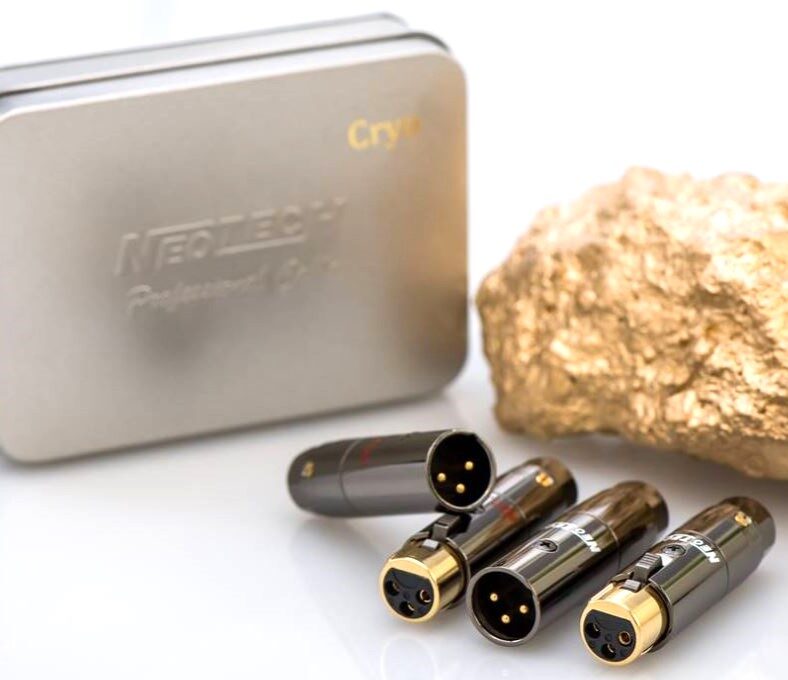
Discover why XLR connectors dominate professional audio. Learn about balanced connections, quality materials, and how Kácsa Audió delivers tailored cable solutions for audiophiles.
Why the XLR Connector Is the Gold Standard for Professional Audio Connections
The XLR connector used in professional audio has earned its dominant position for a straightforward reason: its three-pin balanced design eliminates common-mode noise over long cable runs, making it indispensable in recording studios, live sound environments, and high-end home audio systems alike. Unlike unbalanced connections, the balanced signal path carries equal-but-opposite waveforms on two conductors, allowing noise picked up along the cable to cancel itself out before it reaches the amplifier or preamplifier. This advantage becomes especially significant when cables exceed a few meters in length or when the signal path runs near power transformers and other interference sources. The locking mechanism of the format also ensures a secure, vibration-resistant connection that holds firm even in demanding conditions.
Beyond noise rejection, the XLR format has been refined over decades into one of the most mechanically reliable connector types available. The metal housing provides both shielding and structural integrity, while the three-pin configuration allows a dedicated ground path that remains separate from the two signal conductors. For audiophiles and professionals alike, this combination of electromagnetic immunity, mechanical durability, and consistent cross-manufacturer compatibility represents a rare consensus in an industry often divided by competing formats. It is precisely this consistency that keeps balanced XLR connections at the center of high-fidelity audio infrastructure.
How Kácsa Audió Delivers XLR Cable Solutions Tailored to Every Audiophile’s Needs
Kácsa Audió operates with a model that distinguishes it from typical audio retailers: rather than simply stocking and shipping products, the Budapest-based company also assembles, tests, and configures cables to match each customer’s specific system requirements. Their catalog includes XLR products from respected brands such as Furutech, AudioQuest, aeco, and Neotech, alongside their own KáCsa-branded connectors — covering everything from entry-level gold-plated plugs to high-end tellurium copper and beryllium copper designs. This breadth means that whether a customer is building a budget-conscious balanced interconnect or pursuing a reference-grade signal path, there is a technically suitable solution available. The team draws on direct customer feedback, which continuously informs both the product selection and the assembly process.
What makes Kácsa Audió particularly valuable to the audiophile community is their try-before-you-buy approach: assembled cables can be evaluated at home, in the customer’s own system, with no purchase obligation. This policy removes much of the uncertainty that typically accompanies high-end cable decisions, where system synergy and personal listening preferences play a significant role. Rather than relying solely on specifications and brand reputation, buyers can verify real-world performance before committing. For a product category where differences in connector material and cable geometry can have audible consequences, this structured evaluation process is genuinely practical.
Choosing the Right XLR Cable: Key Factors Every Buyer Should Consider
Conductor material is one of the most consequential variables in any cable purchase. The options span a wide range: standard copper, tellurium copper — valued for its combination of conductivity and machinability — and UP-OCC (Ohno Continuous Casting) copper, which features an unusually long grain structure that can reduce signal degradation at grain boundaries. Plating also matters: 24K gold offers reliable corrosion resistance, silver plating improves high-frequency conductivity, and rhodium provides exceptional hardness and long-term oxidation resistance. Insulation materials such as PVDF and PTFE fluoropolymer are favored in premium applications because their low dielectric constant minimizes signal interaction with the surrounding material.
Housing construction deserves equal attention. A full metal shell offers better shielding and durability than a plastic equivalent, while materials like carbon fiber or anodized aluminum add rigidity without unnecessary mass. Cable diameter compatibility is a practical consideration that is easy to overlook: connectors specify a maximum outer diameter, and mismatches can result in poor strain relief or an insecure fit. Buyers should also consider whether a soldered or crimp-style connection better suits their assembly skills and available tools — some plugs, such as certain AudioQuest models, are specifically engineered for tool-based cold welding rather than soldering, which affects both the assembly process and the long-term integrity of the contact.
The Future of Balanced Audio: Emerging Trends in XLR Technology and High-End Cabling
Materials science is increasingly shaping what is possible in high-end connector design. Furutech’s NCF (Nano Crystal² Formula) technology, for example, incorporates piezo-ceramic and carbon powder compounds into connector housings to reduce static charge and convert resonance energy into heat — a concept that now appears in products aimed at the most discerning listeners. Beryllium copper conductors, long used in precision contact applications, have found their way into audio connectors for their superior spring tension and fatigue resistance. These developments reflect a broader shift: connector engineering is no longer a purely electrical discipline, but one that increasingly draws from materials physics and resonance management.
The demand for high-performance balanced connections is also expanding well beyond professional studio environments into the broader audiophile market. As more listeners invest in streaming-capable DACs, high-resolution playback systems, and dedicated headphone amplifiers with balanced outputs, the practical relevance of quality terminations has grown considerably. Manufacturers are responding with designs that address both electrical performance and physical integration — carbon fiber shells, matte-black metal housings, and color-coded configurations are becoming standard rather than exceptional offerings. This convergence of technical and ergonomic refinement is steadily raising the baseline for what buyers can reasonably expect from a modern balanced connection.